Post

My Best Friend's Wedding (1997)

Immagine
When it was released in 1997, My Best Friend's Wedding was generally well-received by critics, it was a global box-office hit and it played a vital role in reviving Julia Roberts' career. Today, the film is still held in rather high esteem and it is regarded as one of the best romantic comedies of the 1990s. The movie's appeal is quite obvious: its leading stars are rather charismatic and the basic idea of the plot is fun and engaging. But it's also a dated film with various problems - its gender politics first and foremost.  Julianne (Julia Roberts) is a successful and renowned restaurant critic. Her best friend is Michael (Dermot Mulroney), a handsome sport journalist with whom she had a brief fling during college. Julianne and Michael had promised each other that, if by the time they were both 28-year-old neither of them were married, they would marry each other. Shortly before Julianne's 28th birthday, Michael calls her all of a sudden to tell her that ...

Love, Simon (2018)

Immagine
The representation of LGBTQ+ characters has improved significantly over the last fifteen years, spreading through a variety of remarkable films. Films like Brokeback Mountain , Blue is the Warmest Colour , Carol , Moonlight and Call Me by Your Name are all masterpieces in their own, unique ways and they represent excellent achievements in both style and substance. There is one thing common to these movies: tragedy. Whether it is death, a painful separation or a bittersweet reunion, all of these characters must bear overwhelmingly aching consequences of their sexuality. This does not take away from the quality of the pictures themselves: as I said, they are all brilliant and deservedly recognized as such, and the tragedy is perfectly coherent to the setting and context of each movie. Love, Simon is certainly a far less ambitious movie than the previously mentioned and it does not reach their technical brilliance nor their raw power. In its style and its execution, Love, Simon ...

Dogman (2018)

Immagine
The Canaro's killing ("Il delitto del Canaro" in Italian) is one of Italy's most gruesome crimes in recent history. The night of February 18th 1988, Pietro De Negri, a dog coiffeur and small-time cocaine dealer living in Magliana (a small neighborhood in Rome), brutally murdered Giancarlo Ricci, a former boxer and cocaine addict who had long been physically abusive towards him. It's better to leave off the details of the homicide: it's enough to say that the mutilation of several body parts was involved. This tragic episode clearly influenced the realization of Dogman , though it's quite clear that Matteo Garrone ( Gomorra, Tale of Tales ) does not intend to do a faithful telling of a true story: the characters' names have been changed (Pietro De Negri becoming Marcello and Giancarlo Ricci becoming Simone), the story is set in present times instead of 1988 and the actual events play out in a very different way, especially towards the end. These ar...

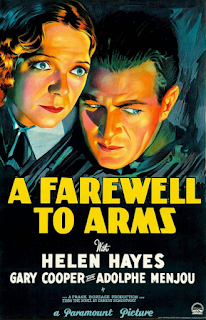
A Farewell to Arms (1932)

Immagine
Ernest Hemingway was one of the greatest American writers of all time. He had a gift for vivid descriptions, a talent for conveying complex and layered thoughts with a clear, simple language and a profound ability to observe human behaviors and feelings. That said, adapting his work to the screen is incredibly difficult: Hemingway's novels are full of personal, intimate reflections that carry the meaning of the whole story. In a movie, it's difficult to translate those inner thoughts in a way that does not appear didactic or excessively expository, but, on the other hand, removing them means getting rid of the thematic complexity of the author's work. Unfortunately, this is the case of A Farewell to Arms , Frank Borzage's adaptation of the 1929 novel. Hemingway himself hated the movie, and it's not hard to see why: the novel, a masterpiece, was a powerful, thoughtful meditation on values such as honor, bravery and love and a devastating depiction of a world tor...

Loro (2018)

Immagine
Silvio Berlusconi, Italy's Prime Minister in four governments, is one of the most fascinatingly puzzling figures of the country's last thirty years. His life is surrounded and punctuated by scandals and controversies, like the unknown source of his money early on in his career, the accusations of him being linked to Mafia, his tax frauds, his affairs with underage girls and prostitutes, his attempts to create laws ad personam to protect himself from criminal charges, his influence over Italian television and his inappropriate or even downright offensive behavior and remarks during national and international political meetings. The list goes on, and yet Berlusconi is still beloved and held in high esteem by a surprisingly large portion of Italian population - at this year election, Berlusconi's party (Forza Italia) received 14% of the votes even though the man himself was currently banned from any legislative office for six years (a sentence overturned in the last two d...

The Fugitive Kind (1960)

Immagine
In 1940, Tennesse Williams wrote a play called  Battle of Angels . After Tallulah Bankhead turned down the leading role, the play premiered on Broadway with Miriam Hopkins instead. It was a spectacular failure, both critical and financial. About fifteen years later, after having become one of the most successful and acclaimed playwrights, Williams rewrote his earlier play into Orpheus Descending  but once again his work did not result into a success. Apparently, telling this story was a passion project for Williams and the lack of appreciation for it caused him great frustration. He adapted his play into the film  The Fugitive Kind in 1960: but even the film, in spite of the author's popularity and the presence of three Academy Award winners in the cast, was a failure, earning not-so-great reviews and not a lot of money. Nowadays, the movie is rarely remembered and that's a pity. Sure, just like the play itself, it's not quite perfect: for example, the character deve...

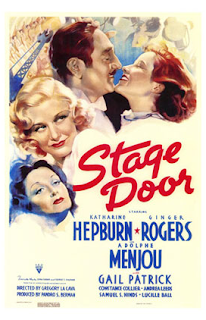
Stage Door (1937)

Immagine
To most people, Gregory La Cava is known as the director of classic screwball comedy My Man Godfrey (1936), the enchanting, lively tale of a homeless man who becomes the butler of a wealthy family. The rest of his filmography is for the most part rather forgotten: films like The Affairs of Cellini (1934), Private Worlds  (1935) and Primrose Path (1940) are mostly remembered because of their Oscar-nominated performances, if they are at all, and among the few people that have actually seen them they are not held in particularly high esteem. Stage Door , loosely based on the play of the same name, is a peculiar case, as it is neither as iconic and revered as My Man Godfrey  nor as obscure as the other movies - and it turns out it's a surprisingly strong piece. Centering around a group of aspiring actresses in New York, Stage Door is not a movie that wants to be revolutionary in its thecnique, nor a social commentary, nor a thoughtful reflection on the theatrical world. ...